
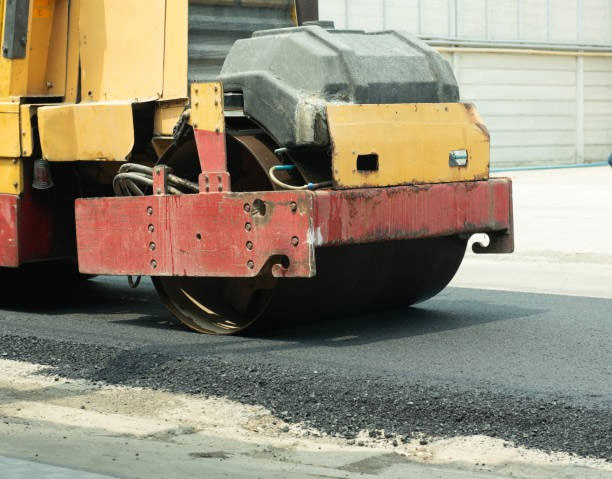
In the large-scale construction industry, the cost-effectiveness and efficiency of heavy machinery are key factors that determine the success of a project.Rubber-tired roller"Therefore, it has become an indispensable tool for contractors who need to compact road surfaces and construction sites to meet standards, while also reducing working time and overall costs."
What is a rubber-tired roller?
Rubber-tired rollers are heavy machinery used for compaction work, especially in road surfaces, construction sites, or areas requiring high density. A key feature of this type of roller is the use of multiple rubber wheels arranged in a series, which helps distribute the pressure evenly across the compacted surface, unlike steel-wheeled rollers which are typically used for initial compaction. Rubber-tired rollers are therefore suitable for the final compaction before asphalt paving, or for maintaining a smooth surface and reducing the likelihood of cracks after construction is complete.Especially in large-scale projects that require high precision.
Rubber-tired rollers and optimizing crushing efficiency on a large scale.
Large contractors working on asphalt roads or large areas require rubber-tired rollers that can not only compact thoroughly but also operate continuously in a variety of areas, including asphalt roads, parking lots, or even general construction sites. The advantage of rubber-tired road rollers is their ability to compact pavement without damaging the compacted surface, as the rubber tires distribute the pressure evenly. This makes them suitable for applications requiring high smoothness and density, such as highways or major city roads.
Essential technologies and features that contractors shouldn't miss.
Compared to the past, newer rubber-tired rollers come with hydraulic systems that allow for adjustable wheel pressure, vibration systems to improve surface compaction, and more energy-efficient and emission-reducing engines. For large-scale contractors, choosing rubber-tired rollers equipped with these technologies not only saves fuel and reduces working time, but also increases safety and reduces risk on site. The modern control systems make the machine easier to maneuver, even in complex terrain.
Maintaining rubber-tired road rollers to extend their lifespan and reduce costs.
Large-scale construction projects require continuous use of heavy machinery. Proper maintenance of rubber-tired rollers is therefore crucial for reducing long-term costs. Contractors should choose rubber-tired rollers with readily available spare parts and good after-sales service, such as local service centers. Regular checks of the hydraulic system and tires will help minimize breakdowns and disruptions that could negatively impact the project.
For large-scale contractors, choosing the right rubber-tired roller with modern technology is a long-term investment that yields returns in terms of efficiency, safety, and operating costs. Overlooking these aspects could lead to delays and unnecessary costs.
Therefore, before deciding to invest in a rubber-tired roller, it is important to carefully consider its features and after-sales service to ensure that this investment aligns with business goals and truly enhances competitiveness in the large-scale contracting market.